Most Centuries in International Cricket by Active Players
Centuries mark true class in cricket. A batter reaches three figures and shows skill under pressure. Centuries in successive Tests, ODIs, and T20s confirm consistency in quality over years. Additionally, such emphasis has been placed on the current cricketers with the maximum number of centuries in international cricket. Leading batters stand out through total tallies, format splits, and key records. Furthermore, fans track these numbers closely for clear ranking insights. Therefore, explore the top active names and their achievements here with Khelstake. Most Centuries in International Cricket
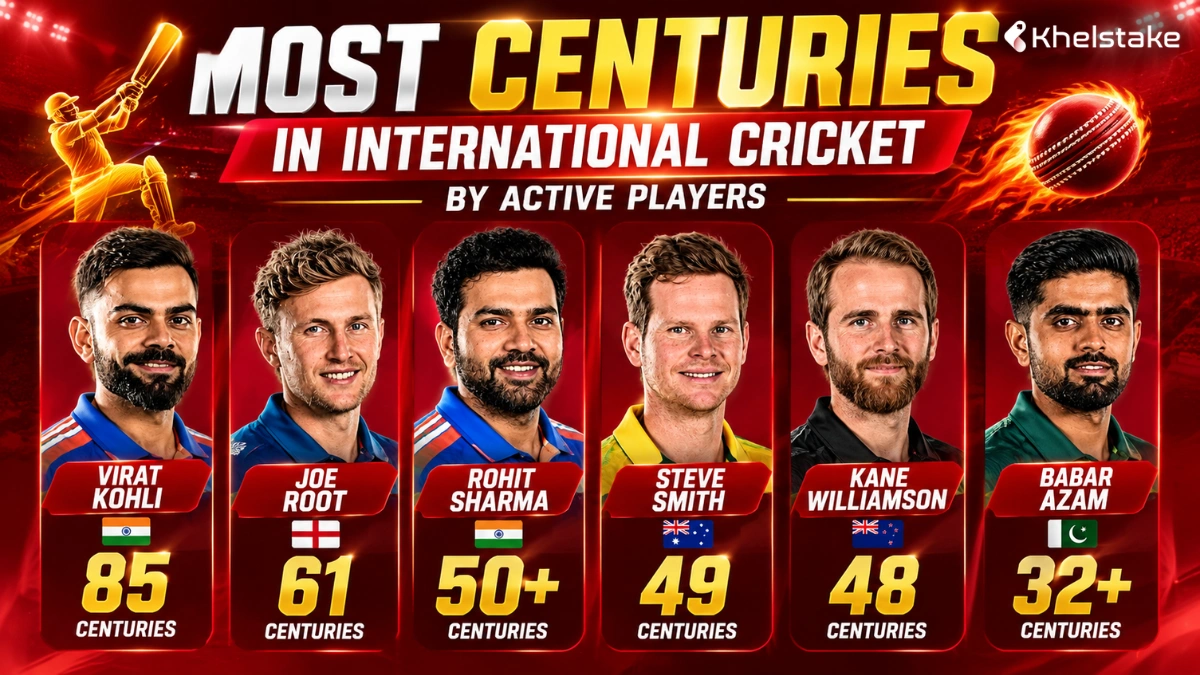
Active players keep adding to their tallies in ongoing careers. In addition, here is the current ranking based on total international centuries.
| Rank | Player | Team | Test Centuries | ODI Centuries | T20I Centuries | Total International Centuries |
|---|
| 1 | Virat Kohli | India | 30 | 54 | 1 | 85 |
| 2 | Joe Root | England | 41 | 20 | 0 | 61 |
| 3 | Rohit Sharma | India | 12 | 34 | 5 | 51 |
| 4 | Steve Smith | Australia | 37 | 12 | 0 | 49 |
| 5 | Kane Williamson | New Zealand | 33 | 15 | 0 | 48 |
| 6 | Babar Azam | Pakistan | 9 | 20 | 3 | 32 |
Kohli has 85 centuries to his credit. The player who has achieved maximum centuries in ODIs is Virat Kohli with 54 centuries. On the other hand, Kohli’s sole century in T20I and 30 tons in Tests make up the total. He dominates Tests with 30 centuries. Consequently, his 20 ODI tons add steady value across formats.
Rohit Sharma reaches 51 overall. He owns five T20I centuries, a top mark. Similarly, his 34 ODI and 12 Test hundreds show power. Steve Smith sits at 49. His 37 Test centuries highlight red-ball mastery. In addition, twelve ODI tons round out strong numbers.
Kane Williamson has 48. He scores 33 in Tests and 15 in ODIs. Therefore, his calm approach builds long careers. Babar Azam totals 32. He has 20 ODI centuries plus three in T20Is. As a result, nine Test tons mark his rise.
These figures update with every match on Khelstake. Moreover, active status keeps the list fluid and exciting. Thus, the most centuries in international cricket ranking stays dynamic.
How Most Centuries in International Cricket Counted?
Test centuries come in the longest format. A batter scores 100 or more runs in one innings. Furthermore, matches last up to five days and demand patience. ODI centuries happen in 50-over games. The target stays the same at three figures. In contrast, batters face more limited overs and build steadily.
T20I centuries occur in 20-over contests. Reaching 100 proves rare due to short time. Therefore, high strike rates help in these quick matches. Teams combine all three formats for the total. Add Test, ODI, and T20I hundreds together. Consequently, this creates the full international century count.
Domestic cricket centuries stay separate. Only matches for the national side count here. In addition, this method clarifies most centuries in cricket discussions. Clear rules help fans on the Khelstake platform compare players fairly. Thus, everyone uses the same format totals.
Most Centuries in Cricket: What Makes These Players Different?
Longevity stands as a key factor. Players stay fit and motivated over many years. Moreover, long careers create more chances to score big. Number of international matches matters a lot. Frequent selection builds experience and rhythm. Therefore, regular play turns starts into full centuries.
Batting position shapes success too. Top-order spots offer more time at the crease. Meanwhile, middle-order roles demand quick adaptation under pressure. Strong technique helps against all attacks. Solid defense and shot selection work in every condition. Furthermore, players adapt to pitches and bowlers worldwide.
Consistency separates the elite group. They convert fifties into hundreds often. As a result, mental strength keeps focus during long innings. Cross-format ability adds extra value. Success in Tests, ODIs, and T20Is shows full range. Similarly, converting starts remains vital every time.
These traits create sustained high scores. Consequently, they explain why certain names lead the charts. Thus, a true Cricket Century reflects deep skill.
Most Centuries in International Cricket Across Formats
Test cricket allows the most centuries overall. Long duration gives batters extra time. Moreover, they build innings carefully over sessions. ODI centuries appear next in frequency. Fifty overs provide solid opportunity. In addition, batters pace their scoring with clear targets.T20I centuries stay the hardest to achieve. Only 20 overs limit total balls faced. Therefore, high risk and quick scoring make three figures rare. Test and ODI formats favor bigger scores. Bowlers tire and fields spread over time. In contrast, T20Is demand aggressive intent from the start.Players with strong red-ball skills often lead Tests. White-ball experts shine more in limited overs. Furthermore, balanced stars succeed across all three. This difference shapes career totals. Format variety tests true batting depth. Consequently, fans enjoy the challenge in each style. Thus, rankings reflect these unique demands well. The most centuries in international cricket list shows format balance clearly. Conclusion
Century-making defines excellence in international cricket. Longevity and consistency ensure that they reach the top. Virat Kohli, Joe Root, and Rohit Sharma top the active rankings list currently. In addition, the most centuries in international cricket will change due to their respective careers. Therefore, follow every update and complete your Khelstake Registration for more cricket insights.